



Logo bibleo
Apologetics & dialogues

Answer with clarity and respect

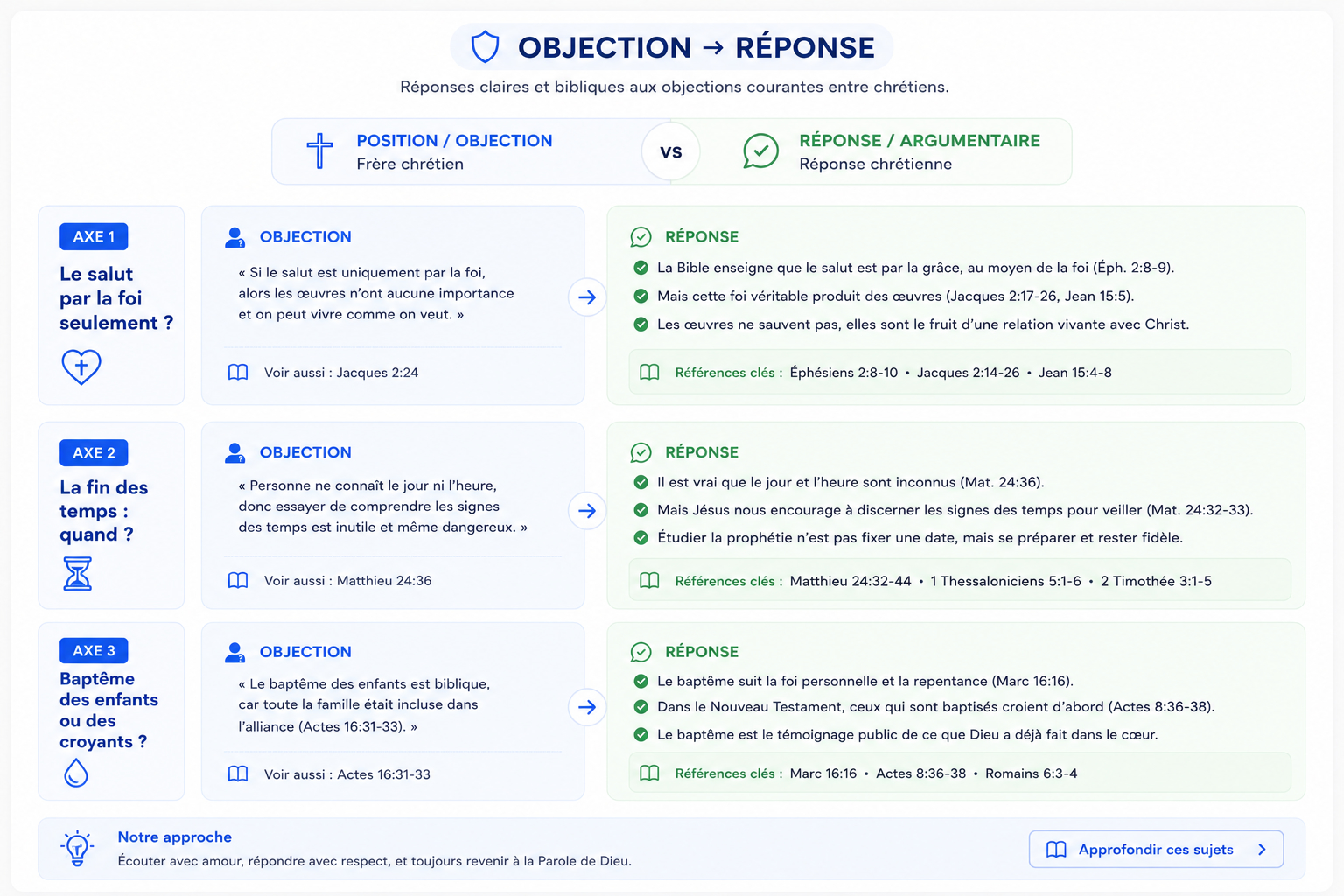
The objection reframed, an answer in three points and the texts to open: enough to answer without being caught out, and without steamrolling the person in front of you.

Paul, Bibleo's AI biblical exegesis agentRuth, Bibleo's AI coordination agentJohn, Bibleo's AI visual creation agent★★★★★
Churches, creators & families create with Bibleo
CreateHomeProjectsBibleRuth
Dialogue
WITH PAULThe question, reframed
"If God is good, why is there suffering?"
First I reframe what the question really says, then I open the texts — and I name what is still debated.
1 · What the question really sayssuffering calls God's goodness into question, not his existence.Job 38–42
2 · What the text answersGod does not explain himself from a distance: he enters the suffering.Ésaïe 53.3-5
3 · What is still debatedthe "why" is not lifted; the presence, though, is promised.Romains 8.18-23
Every claim points to a text you can open and check.
Why Bibleo

Answer objections about the faith with confidence and gentleness

Faced with an objection, we often lack words — or perspective. Bibleo prepares clear, respectful apologetic answers: it rephrases the question, structures the arguments and provides verifiable references, to witness to your faith with confidence and kindness, faithful to the Scriptures.

  • Objections rephrased then answered plainly
  • Dialogues with Islam, Judaism and doctrinal questions
  • Traceable references — you validate the verification
  • A tone that enlightens and respects, never aggressive
How it works

From question to answer, in 3 steps

clear answers, with respect

1
CreateHomeProjectsBibleRuth
Home
Hello, what would you like to create today?
Answer: "Why the cross?"
My ChurchPreachPresentationStudyVerseImageVideoSocial mediaEventCampaign
In progressthe specialists are working for you

Salvation in Christ alonePresentation · Outline ready: generating slides

The cross — artworkImage · in progress…
Step 1

Ask the question or the objection

Just as it was asked of you, in plain words.
2
CreateHomeProjectsBibleRuth
Apologetics
"Why was the cross necessary?"
1What the question really says
2What the text states
3What is still debated
Texts and sourcesto open and check
Step 2

Paul structures the answer

Arguments, references and points of dialogue, with respect.

3
CreateHomeProjectsBibleRuth
Projects
LIBRARYYour answers, kept
Salvation in Christ alonePresentation · Peter · today
Open
The cross — Sunday artworkArtwork · John · yesterday
Open
Discipleship — a study of Luke 14Study · Paul · Monday
Open
Outreach weekCampaign · Ruth · last week
Open
Step 3

Review and share

Adjust the tone, keep control, witness serenely.

Real examples

Answers structured

Drag with the mouse or navigate with the arrows.

Objection → answer — exemple créé avec Bibleo Answer
Objection → answer3 argued points
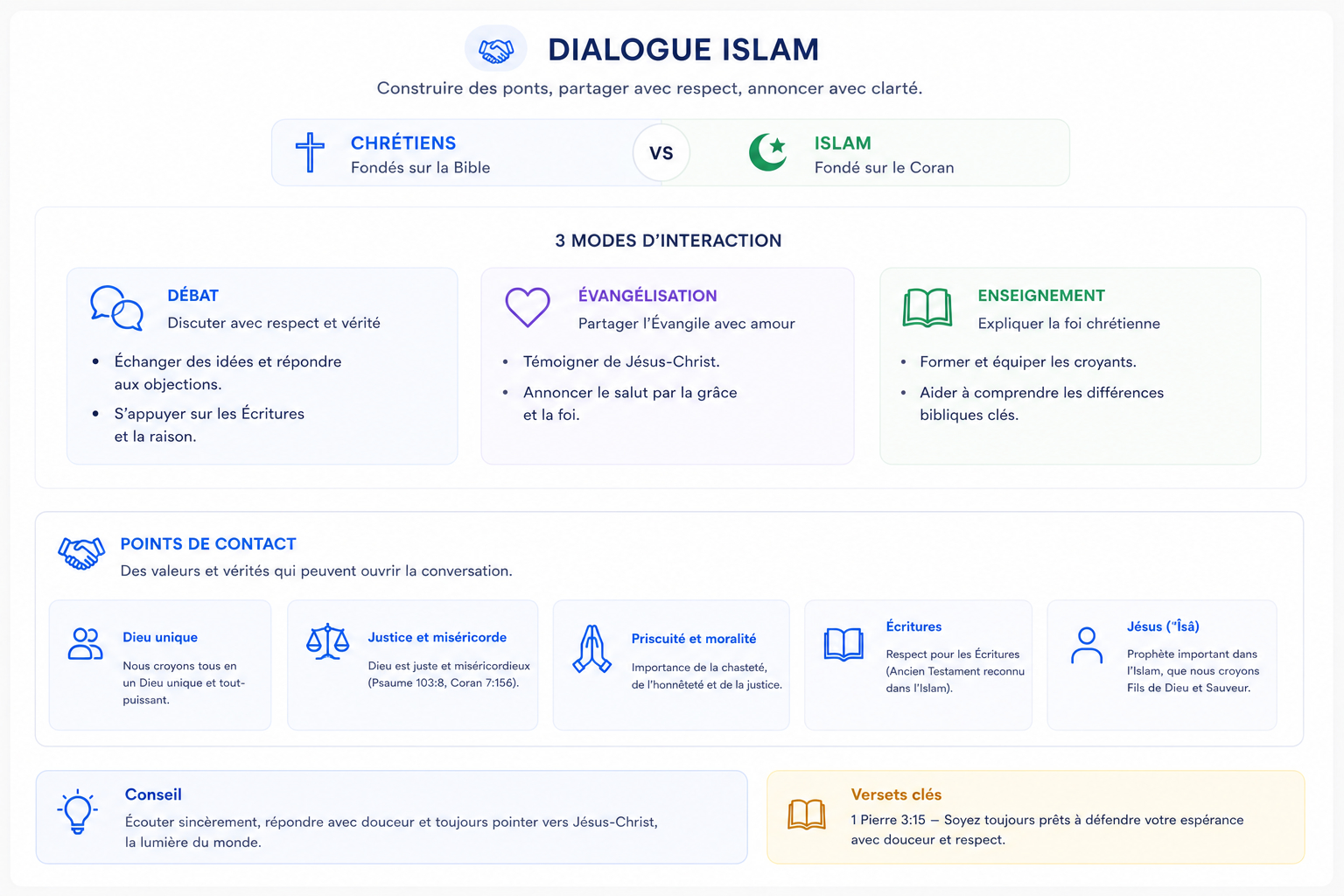
Dialogue with Islam — exemple créé avec Bibleo Dialogue
Dialogue with Islampoints of contact
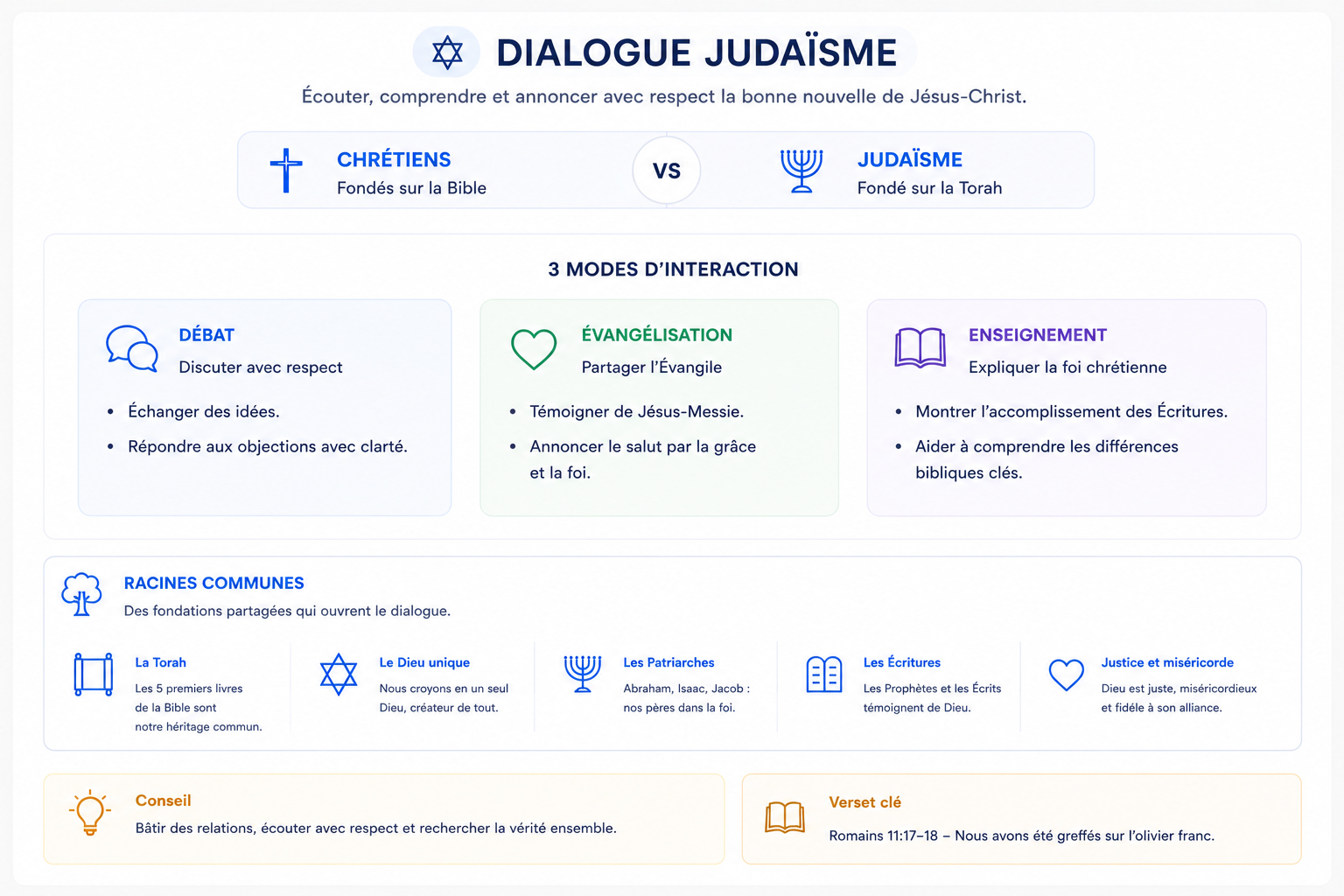
Dialogue with Judaism — exemple créé avec Bibleo Dialogue
Dialogue with Judaismcommon roots
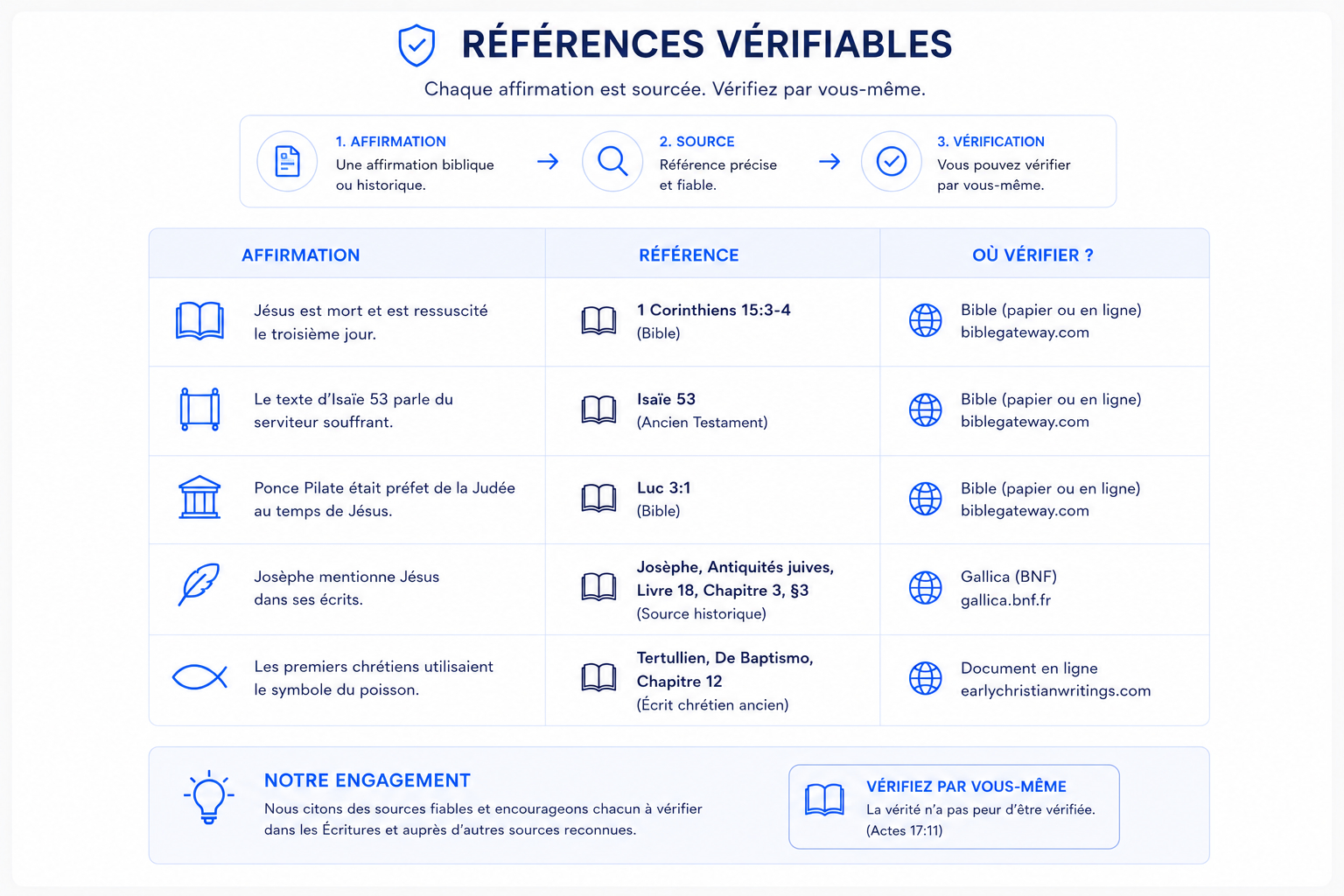
Verifiable references — exemple créé avec Bibleo Sources
Verifiable referencesevery statement sourced
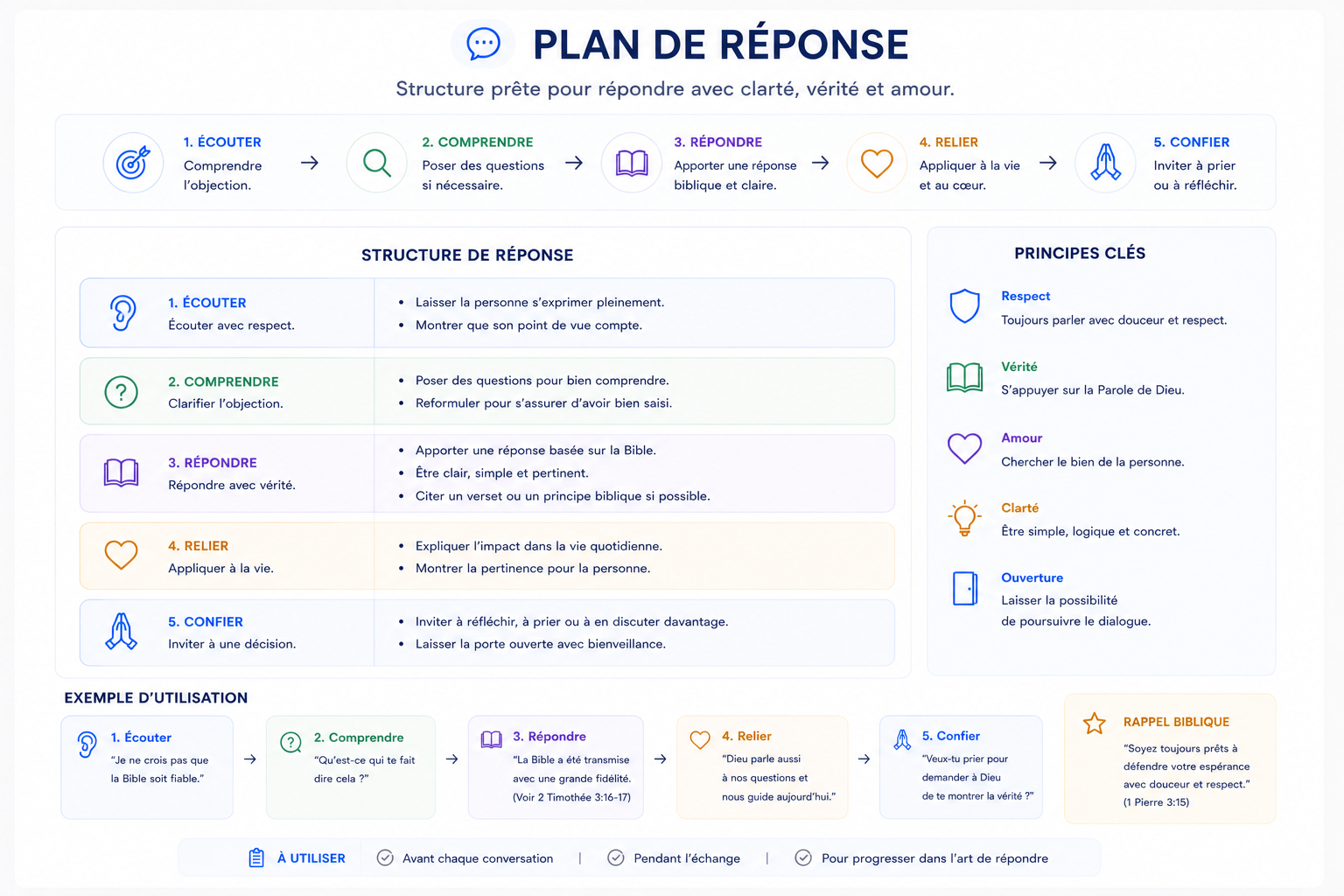
Answer outline — exemple créé avec Bibleo Map
Answer outlinestructure ready
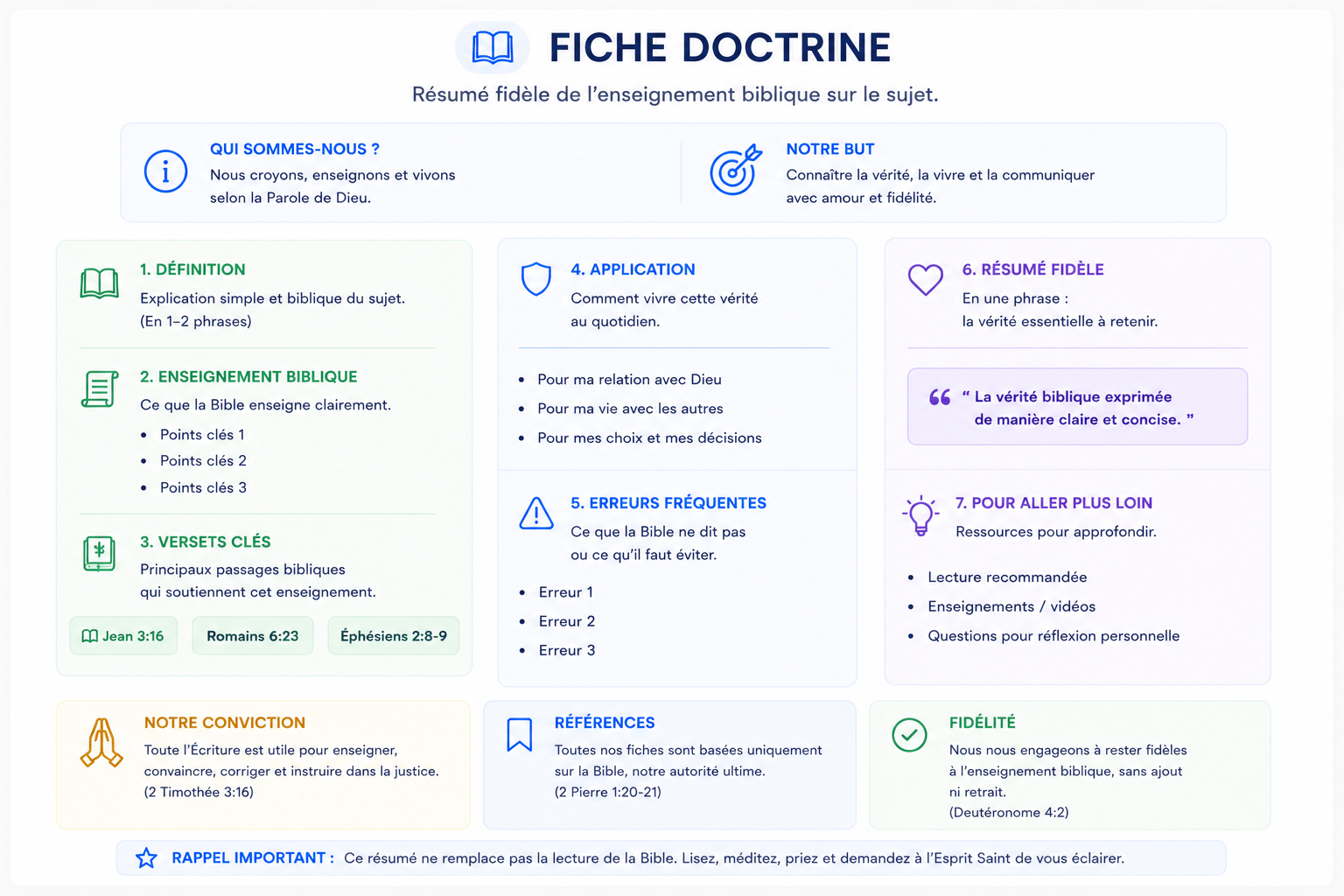
Doctrine sheet — exemple créé avec Bibleo Doctrine
Doctrine sheetfaithful summary
Frequent objections

The questions people will ask you

Four real objections — unfold to see how Paul structures each answer.

“The Bible has been altered over the centuries”

Paul answers with the manuscripts: more than 5,800 Greek NT manuscripts, massive agreement between them, and the Dead Sea Scrolls for the OT. The transmission is documented — not assumed.

“How can God allow suffering?”

Three points: the real freedom given to man, the God who suffers WITH us at the cross, and the hope of Romans 8. Never a ready-made formula — a structured, human answer.

“All religions are the same”

Paul compares with respect: real points of contact, acknowledged differences, and the specificity of grace. Dialogue with Islam and Judaism has its own dedicated paths.

“Science has refuted faith”

Distinguishing the questions: the “how” of science, the “why” of faith. With references from believing scientists and the honest limits of each field.

Features

Concretely, what does does Paul help you say?

Solid, kind answers, to witness without feeling helpless.

Structured arguments

A clear answer in a few points: easy to understand, remember and share.

Verifiable references

Traceable biblical and historical supports — you keep control of the verification.

Dialogues with Islam & Judaism

Points of contact and divergence presented with accuracy and respect.

Doctrinal questions

Trinity, salvation, suffering, Scriptures: clear landmarks on the big questions.

Respectful tone

The goal is not to win a debate but to enlighten: gentleness and respect first.

For every context

Evangelism, youth, school, everyday conversations: adapted to your situation.

How an answer is prepared

You answer better to a question you have understood.

Example: "How can God allow suffering?"

The order is not a detail: reframe first, open the texts next, and say plainly what is still debated.

01

What the question really says

The objection is reframed honestly, with what it implies. Often the real question is not the one being asked.

02

What the text states

The Bible passages and historical markers are gathered with their references, to open and to check.

03

What is still debated

Points of disagreement are named, without caricature. An honest answer also says what it does not settle.

CreateHomeProjectsBibleRuth
Folder
The sources, to open
1 Corinthiens 1.18-25open the text
Original languages
7
Parallel passages
5
Teaching
4
Objections addressed
3
Observing the text stays separate from interpreting it.

The texts quoted stay open to check: you verify before answering.

Dialogue

Preparing an answer is not preparing for a fight.

The preparations name the disagreements without attacking people or caricaturing beliefs — including in dialogues with Islam or Judaism.

Interfaith dialogue

Talking with a Muslim, talking with a Jewish friend.

You don't win a debate: you make the Gospel audible.

With them the question is not "does God exist?": they already believe he does. It is: who is Jesus, and why the cross? Bibleo prepares words that start from their text as much as from ours — respectfully, and without giving ground on the substance.

With a Muslim friend

What the Qur'an says about ʿIsa and what the Gospels affirm about Jesus: sonship, the cross, the resurrection. Points of agreement are named, so are the disagreements — without caricature, and with references on both sides.

With a Jewish friend

The Messiah awaited in the Hebrew Scriptures: Isaiah 53, Psalm 22, Daniel 9, Zechariah 12. You read the Tanakh with him, show how the New Testament connects to it, and respect what is still debated.

From their book, and from the Bible

Every claim points to a text you can open: a sura or a Tanakh passage on one side, a Bible chapter on the other. You check before you speak — and you quote accurately.

Words that stay brotherly

The tone is prepared as much as the substance: no mockery, no triumphalism. The point is that you can meet again, and the conversation can continue.

What actually changes

The same question asked, but prepared.

The difference does not show in the argument: it shows in the calm with which you answer.

WITHOUT PREPARATION

You answer from memory, and think it over that evening

  • The reference gets looked up afterwards, sometimes never
  • Everyone on the team answers differently
  • Dialogue with another faith gets improvised
  • We confuse answering with being right
BIBLEO

Common questions are worked out in advance

  • The passages and sources gathered with the answer
  • One shared sheet for the whole team
  • Points of agreement and disagreement set out
  • A short answer you can actually say out loud
Prepare an answer
Let's be honest

What gets in the way, and that needs saying.

"Apologetics puts people's backs up."

When it tries to win, yes. The answers prepared here begin by reframing the objection and naming what is still debated — nothing designed to crush anyone.

"An AI does not know the person I am talking to."

That's right. It prepares the material; you know the person, their story and the right moment to speak — or to stay quiet.

"The sources can be wrong."

They are shown to be opened and checked, not quoted from memory. A reference you have not verified has no place in your answer.

FAQ

Everything you need to know

Does Bibleo answer for me during the conversation?

The solution is there to prepare your conversation. You choose your words, listen to the person and keep responsibility for what you pass on.

Do the references need checking?

Yes. Open the texts, check the quotations and examine the context before keeping an argument. An AI summary is a starting point, no more.

Which topics can I work on?

Objections to the Christian faith, doctrinal questions and points of dialogue with Islam or Judaism. A precise question makes for a more useful preparation.

Can I prepare a handout for a group?

Yes. Organise the questions and chosen references into a discussion sheet, then adapt the depth and the vocabulary to the participants.

Are the answers aggressive towards other beliefs?

No, and that is a deliberate choice: the preparations name the points of disagreement without attacking people or caricaturing beliefs.

Can I prepare for an objection nobody has written down?

Yes. Write the question exactly as it was put to you, in their words: the preparation starts from there.

Your next question can become a prepared answer.

One free creation, no card needed. The references are there to be checked.

1 free creation no credit card required you approve before it goes out
🎨 Colors (test)temporary
Font
Appearance
Ruth
Ruth
bibleo assistant
State your goal in one sentence (e.g. “I want a verse + a visual + a post”).